keli
keli 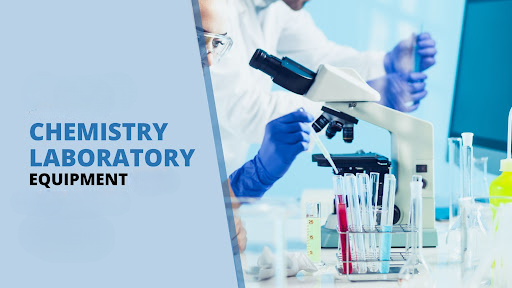
Chemistry is a laboratory based science, and to gain practical skills and theoretical knowledge you will need to spend time in the laboratory making observations, taking measurements and carrying out experiments. No chemistry lab is complete without basic laboratory apparatus. Biologists, chemists and naturalists have work to do. Whether measuring liquids, heating solutions or noting targets of change caused during reactions chemistry lab instruments ensure results are not only specific and accurate they’re also consistent with replicable outcomes all helping create theoretical knowledge through empirical work.
Supporting accurate measurement and observation
The proper measurement of chemicals is one of the fundamental tasks that basic laboratory apparatus. Precision is aided by using apparatus such as measuring cylinders, pipettes, burettes and balances which allow accurate measurement of quantities used in experiments. Precision is of paramount importance in chemistry because even the slightest error can lead to different results. Transparent glasses, and graduated instruments are also useful when observing color changes, flocculation, or phase transitions that may occur during reactions; for example precipitation or other lack of clarity.
Enabling controlled chemical reactions
The chemistry laboratory apparatus often needs to control such conditions as temperature, reaction time and mixing rate. Chemistry lab equipment such as beakers, flasks, and test tubes provide specific areas to observe chemical reactions. Appropriate equipment facilitates uniform heating, good mixing and containment of reactive materials. This control is essential in order to reproduce and effectively analyze experimental results.
Improving laboratory safety and best practices
Safety is a very important part of chemistry. Fundamental lab equipment includes safety oriented tools that limit exposure to dangerous materials: clamps, stands, tongs and protective shields reduce contact with substances. The correct use of chemistry lab equipment minimizes accidents such as spills, burns or exposure to hazardous chemicals. Additionally, the proper handling methods teach students lab safety and culture.
Improving learning through hands on experience
Practical experimentation with fundamental laboratory equipment consolidates the theoretical knowledge imparted in class. When students conduct experiments in the laboratory, they can conceptualize chemical principles, for example stoichiometry; reaction kinetics and equilibrium. This hands on learning process encourages retention, curiosity and understanding, and makes the world of chemistry more approachable and fun.
TECHNICAL TRAINING AND LABORATORY DISCIPLINE THEORY OF TECHNICAL TRAINING AND..
Frequent use of chemistry laboratory equipment ensures that students learn necessary technical abilities such as precision measurement, data recording, and experimental design. Carrying glass, preparing apparatus, cleaning equipment all teach discipline, organization and responsibility. Those core skills will be essential for not only the advanced work in the laboratory, but also their future careers in science.
Ensuring consistency and repeatability
Common laboratory equipment makes it possible for experiments to be reproduced under similar conditions, a necessary aspect of scientific verification. [2] To achieve reproducible measurements among different laboratory sessions and operators, standard tools are necessary. This repeatability allows students to learn the meaning of scientific method and of accurate data in chemical work.
Conclusion:
The essential laboratory apparatus are used in the chemistry labs for some specific purposes & also it helps in getting good results. In doing so, students get hands on exposure to the physics of laboratory equipment, as well as opportunities to apply and appreciate rigorous scientific thinking. Such resources are essential for successful experimentation and long term survival in chemical education and research.